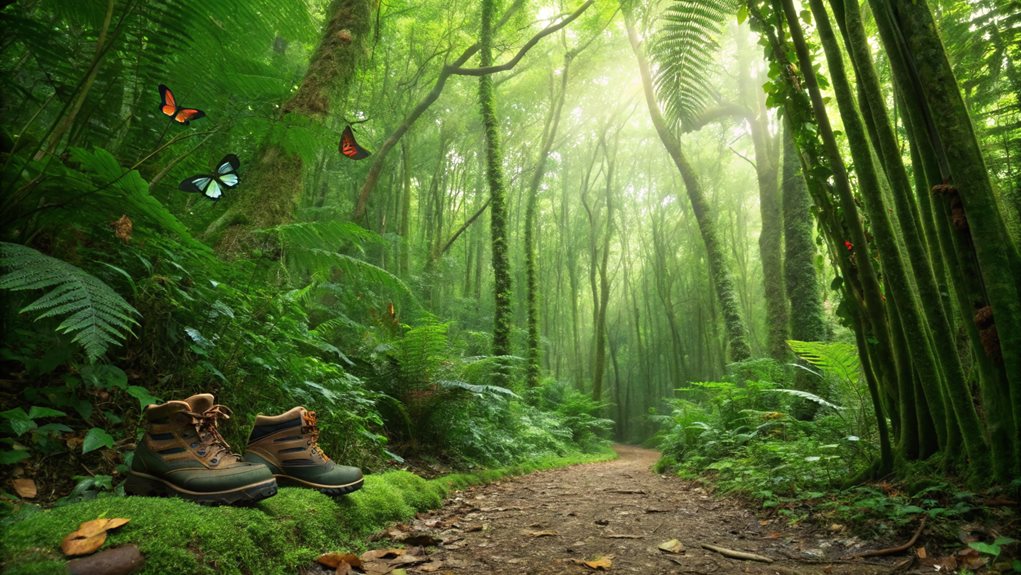
Jungle trekking presents beginners with an exciting adventure teeming with vibrant sights and sounds. Proper preparation is vital. Essential gear includes sturdy hiking boots, moisture-wicking socks, and reliable water purification systems. Physical conditioning, focusing on cardio, core strength, and flexibility, enhances endurance. Safety is paramount; dress appropriately, stay hydrated, and travel in groups. Respect local wildlife and ecosystems to fully enjoy the experience. With adequate planning, novices can embrace the thrill of exploring these lush terrains. Many more tips await.
Essential Gear for Jungle Trekking
When venturing into the lush embrace of the jungle, the right gear transforms a challenging expedition into an exhilarating adventure. Footwear choices are paramount; sturdy, breathable hiking boots with good traction protect against uneven terrain and potential hazards. Lightweight, moisture-wicking socks further enhance comfort, reducing the risk of blisters. Hydration strategies must also be prioritized, as the humid environment can lead to rapid dehydration. A reliable water bottle or hydration pack allows trekkers to replenish fluids easily while on the move. Additionally, portable water purification systems guarantee the safety of drinking water sourced from streams. By investing in quality gear and planning ahead, jungle trekkers can navigate the wilderness with confidence, fully immersing themselves in the vibrant scenery around them.
Physical Preparation for Beginners
Physical preparation is vital for anyone starting a jungle trekking adventure, as it guarantees safety and enhances the experience. Beginners should focus on meeting basic fitness requirements, strengthening key muscle groups, and engaging in endurance-building activities to navigate challenging terrains. A well-rounded fitness regimen can make the difference between an enjoyable trek and a strenuous ordeal.
Basic Fitness Requirements
Although many beginners may feel daunted by the thought of jungle trekking, a solid foundation of fitness can transform the experience into an exhilarating adventure. It is crucial to dispel common fitness misconceptions and trekking myths that suggest only elite athletes can initiate such journeys. In reality, moderate cardiovascular fitness is sufficient; activities like brisk walking or cycling can greatly enhance stamina. Flexibility and core strength also play essential roles in traversing uneven terrain. Beginners should aim for a balanced fitness routine, incorporating aerobic, strength, and flexibility exercises. Gradually building endurance through consistent training not only guarantees safety but also boosts confidence, allowing trekkers to fully appreciate the beauty and challenges of the jungle.
Strengthening Key Muscles
Building strength in key muscle groups is vital for beginners starting on a jungle trekking adventure. A strong core and robust leg strength are essential for maintaining balance and endurance on uneven terrain. Implementing targeted workouts can greatly enhance physical readiness.
| Muscle Group | Recommended Exercises |
|---|---|
| Core | Planks, Russian twists, Bicycle crunches |
| Legs | Squats, Lunges, Step-ups |
Incorporating these core exercises into a regular fitness routine not only prepares trekkers for the demands of jungle paths but also minimizes injury risks. Strengthening these areas guarantees stability, enabling beginners to navigate challenging landscapes with confidence and safety.
Endurance Building Activities
For beginners enthusiastic to commence on a jungle trekking adventure, developing endurance is essential to enjoying the experience and overcoming the challenges of the wild terrain. Engaging in a regular regimen of cardio exercises is crucial for building stamina. Activities such as running, cycling, or swimming can greatly enhance cardiovascular fitness. Incorporating interval training, which alternates between high-intensity bursts and rest, can yield impressive results in a shorter time. For instance, beginners might sprint for 30 seconds, followed by a minute of walking, gradually increasing intensity as their fitness improves. This approach not only boosts endurance but also prepares the body for the unpredictable nature of jungle trekking, ensuring a safer and more enjoyable exploration of the great outdoors.
Safety Tips for Jungle Adventures
When commencing on a jungle adventure, guaranteeing safety is paramount, as the lush and vibrant environment can also harbor unforeseen dangers. Adventurers should be well-prepared to navigate the dense foliage and potential wildlife encounters. Familiarity with navigation techniques is essential; using maps and compasses can prevent getting lost in the wilderness.
| Safety Tips | Description | Importance |
|---|---|---|
| Dress Appropriately | Wear sturdy shoes and long sleeves. | Protects against insects and injuries. |
| Stay Hydrated | Carry sufficient water. | Prevents dehydration in humid conditions. |
| Travel in Groups | Never trek alone. | Enhances safety and support. |
| Know the Wildlife | Research local fauna. | Avoid dangerous encounters. |
| Emergency Plan | Have a first aid kit and communication. | Guarantees quick response to incidents. |
What to Expect During a Jungle Trek
Starting a jungle trek reveals a world teeming with life and vibrant ecosystems. Adventurers may encounter a diverse array of wildlife, from colorful birds to elusive mammals, adding excitement and wonder to the journey. However, it's important to remain cautious during these wildlife encounters, as some animals may be unpredictable. Weather conditions play a significant role in the experience; trekkers might face sudden downpours or steamy humidity, making appropriate gear essential. Proper footwear and breathable clothing will enhance comfort and safety. Maneuvering through dense vegetation can be challenging, requiring focus and awareness of surroundings. Overall, a jungle trek promises an exhilarating adventure, but preparation and respect for nature are essential for a safe and enjoyable experience.
Beginner-Friendly Jungle Trails
For those new to jungle trekking, selecting beginner-friendly trails is vital for an enjoyable experience. These trails often feature well-marked paths and manageable terrain, making them ideal for novices keen to explore the wonders of nature. Additionally, understanding essential safety tips can enhance their adventure, ensuring a memorable journey through the vibrant wilderness.
Popular Beginner Trails
As novice adventurers step into the vibrant world of jungle trekking, selecting the right trail can greatly enhance their experience. Beginner-friendly trails offer manageable distances and opportunities to observe diverse jungle fauna in a safe environment. Here are three popular options:
- Maui's Iao Valley Trail: A short, well-marked path featuring lush vegetation and stunning views.
- Costa Rica's La Fortuna Waterfall Trail: A gentle hike leading to a breathtaking waterfall, perfect for families.
- Borneo's Kinabatangan River Trails: Easy routes alongside the river, allowing trekkers to engage in wildlife spotting and learn effective trail navigation.
These trails provide a perfect introduction to the jungle, ensuring a memorable and safe adventure for beginners.
Essential Trail Safety Tips
Exploring the enchanting world of jungle trekking opens up a domain of adventure, but safety remains a top priority for newcomers. Awareness of trail hazards is essential; roots, rocks, and muddy patches can pose risks to untrained hikers. A sturdy pair of hiking boots can provide important grip and protection. Additionally, understanding wildlife encounters can enhance safety; staying calm and backing away slowly from animals is critical. Attaching bells to backpacks can alert wildlife of human presence, minimizing surprise encounters. Trekking in groups and informing a trusted individual of planned routes can offer extra security. By preparing adequately and remaining vigilant, beginners can savor the beauty of the jungle while ensuring a safe and enjoyable experience.
Respecting Local Wildlife and Ecosystems
Harmony with nature is essential for a rewarding jungle trekking experience. Respecting local wildlife and ecosystems not only enhances the adventure but also contributes to wildlife conservation and ecosystem balance. Trekking enthusiasts should consider the following:
- Maintain Distance: Observing animals from afar minimizes stress on wildlife and fosters a natural environment.
- Stay on Trails: Using established paths prevents habitat destruction and preserves the integrity of delicate ecosystems.
- Leave No Trace: Carry out all waste and refrain from picking plants or disturbing wildlife, ensuring minimal impact on the environment.
About The Author